
Taking charge of your health starts with awareness. For many women, a self breast exam for cancer is the first line of defense in detecting changes early. Understanding your body allows you to notice even subtle differences that might otherwise go unnoticed. This blog post, guided by the expertise of Dr MSS Keerthi, a renowned Cancer Specialist in Hyderabad with over 17 years of experience, aims to empower you with the right knowledge. At Hills Gastro & Onco Care, we believe that early detection saves lives.
In this blog, you will learn...
- The correct steps for breast self exam.
- The importance of breast self exam in early detection.
- The difference between a self breast exam, a clinical examination breast, and a mammo test.
What Is a Breast Self-Exam?
The breast self examination definition is simple: it is a method where an individual checks their own breast tissue for any lumps, distortions, or swelling. The breast self examination meaning goes beyond just physical touch; it is about “breast awareness.” The primary purpose of breast self examination is to become familiar with the normal feel and appearance of your breasts so you can identify any breast self examination sign and symptoms that seem unusual.
Importance of Breast Self Exam:
Why should you perform a self examination for breast? Here are the primary breast self examination benefits:
- Early Detection: Many cases of self breast exam for cancer detection happen at home.
- Cost-Effective: It is a free breast test you can do in privacy.
- Empowerment: It reduces anxiety by giving you a sense of control over your health.
- Prompt Medical Care: Knowing what is “normal” helps you seek help from a Breast Cancer Specialist immediately if something changes.
Breast Self Examination When to Do:
Timing is crucial for an accurate self breast exam.
- Premenopausal women: The best time for a self breast exam before or after your period is usually 3 to 5 days after your period ends, when breasts are least tender.
- Postmenopausal women: Pick a fixed date each month (e.g., the 1st of every month) to stay consistent.
5 Steps for Breast Self-Exam: A Guide by Dr. MSS Keerthi
Following a proper breast self exam procedure ensures you don’t miss any areas. Dr MSS Keerthi recommends these five steps:
- Visual Inspection in the Mirror: Stand with shoulders straight and arms on hips. Look for changes in size, shape, or skin texture (like dimpling).
- Raise Your Arms: Look for the same changes while your arms are raised high.
- Check for Discharge: While at the mirror, look for any fluid coming out of one or both nipples.
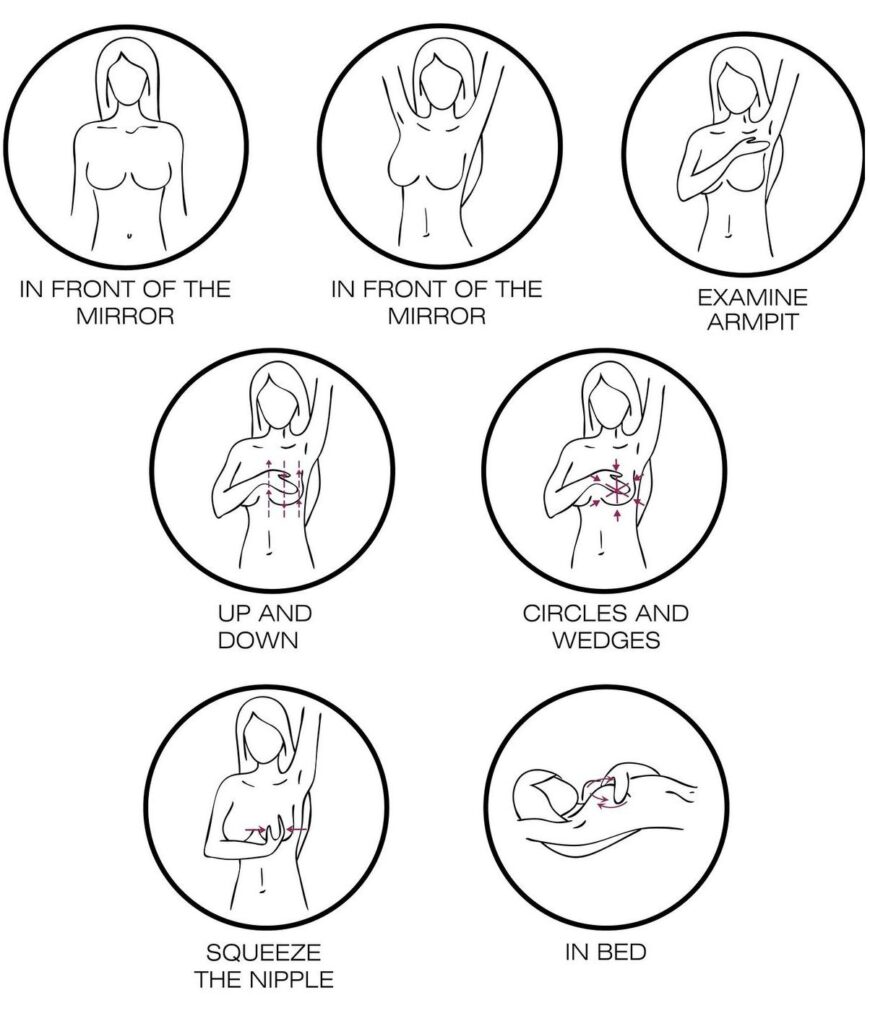
- Lying Down: Feel your breasts while lying on your back. Use your right hand to feel your left breast and vice versa. Use a firm, smooth touch with the finger pads.
- Sitting or Standing: Many women find it easiest to perform this breast examination female in the shower when the skin is wet and slippery.
Expert Tip: Use the dial clock method of breast examination. Imagine your breast is a clock face; move your fingers from 12 o’clock to 1 o’clock and so on, moving in toward the nipple to ensure full coverage.
What Changes or Lumps Should You Look For?
Knowing what to feel for in breast self exam is vital. Look for:
- Hard lumps or knots in the breast or underarm.
- Thickening of the tissue that feels different from the rest.
- Skin redness, scaling, or “orange peel” texture.
- Nipples turning inward (retraction).
What to Do If You Find Something Unusual?
Don’t panic. Most lumps are non-cancerous (benign). However, if you find a lump or notice any breast self examination sign and symptoms mentioned above, you should:
- Schedule an appointment with a Gynecological Cancer specialist In Hyderabad.
- Prepare to describe exactly where the lump is and when you noticed it.
- Consult Dr MSS Keerthi at Hills Gastro & Onco Care for a professional evaluation.
Breast Self-Exam vs Clinical Exam and Mammogram:
While a self breast exam is helpful, it does not replace professional screening.
- Clinical Examination Breast: This is a breast examination at doctors where a specialist physically checks for abnormalities.
- Mammo Test (Mammogram): An X-ray of the breast that can find tumors too small to be felt by hand.
Dr MSS Keerthi emphasizes that a self breast exam for cancer is a tool to be used alongside annual clinical visits, not instead of them.
Who Should Be Extra Careful While Doing Self-Exam?
Certain individuals should be more vigilant:
- Women with a family history of breast or ovarian cancer.
- Women who have undergone hormone replacement therapy (HRT).
- Individuals who have previously had benign breast lumps.
Conclusion for Breast Self Examination:
In conclusion of breast self examination, making this a monthly habit is one of the best gifts you can give yourself. While the steps for breast self exam are easy to learn, their impact on your long-term health is massive. Early detection through a self breast exam for cancer significantly improves treatment outcomes.
If you have concerns or need a professional clinical examination breast, visit Dr MSS Keerthi at Hills Gastro & Onco Care. Your health is our priority.
FAQs: Quick Guide to Breast Awareness
Use the finger pads of your three middle fingers. Move them in small, circular motions using three levels of pressure (light, medium, and firm). Follow the dial clock method of breast examination to ensure every “hour” of the breast and the underarm area is covered.
Perform a self breast exam for cancer in two stages:
- Look: Check in a mirror for skin dimpling, redness, or nipple changes.
- Feel: Use your hands to palpate the tissue while lying down or showering to detect deep-seated lumps or thickening.
The ideal time for a self breast exam before or after period is 3 to 5 days after your period ends. For those not menstruating, perform the exam on the same date every month to maintain consistency.
There are 5 essential steps:
- Visual check (arms down).
- Visual check (arms up).
- Check for nipple discharge.
- Physical palpation (lying down).
- Physical palpation (standing/showering).
Feel for any new or unusual changes, specifically:
- A hard, painless lump or “knot.”
- A thick, firm mass that feels different from the surrounding tissue.
- A change in the texture of the skin (resembling an orange peel).
- Lumps or swelling in the armpit area.