
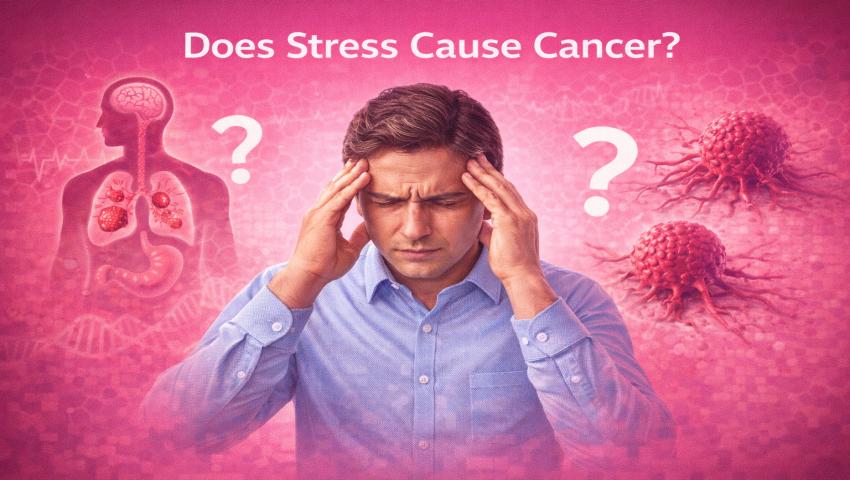
Have you ever wondered if daily stress, tension, or emotional pressure can really cause cancer? Many people believe that long-term stress may lead to serious diseases. But what does science actually say about the stress-cancer connection? Let’s understand the facts clearly. To help patients navigate these concerns, Dr. M.S.S. Keerthi, a highly experienced specialist with 17+ years in the field, provides expert guidance at Hills Gastro & Onco Care. As the best cancer surgeon in Secunderabad, Hyderabad, he helps patients distinguish between myths and medical facts when asking, “Does Stress Cause Cancer?”
In This Blog, You Will Learn...
- How stress affects the body and mind
- Whether stress can directly cause cancer
- What research says about stress and cancer risk
- How managing stress supports overall health
What Is Stress?
What Is Stress? Stress is the body’s natural response to pressure or challenges. It can come from work, family issues, illness, or emotional strain. Short-term stress is normal, but chronic psychological stress and long-term mental stress can harm the body over time.
Stress and Body Changes:
When stress continues for a long time, the body releases stress hormones like cortisol and adrenaline. These hormones can disturb sleep, digestion, immunity, and hormone balance. This is where concerns about cancer due to stress often arise, as chronic physiological changes may impact how the body repairs itself.
Does Stress Cause Cancer/tumors ?
There is no direct scientific proof that stress alone can cause cancer. Stress does not directly create cancer cells or turn normal cells into cancer. So questions like “can stress cause brain cancer” or “can stress cause skin cancer” do not have clear scientific evidence.
However, stress and cancer development may be linked indirectly.
What Research Shows?
Studies show that chronic stress can create conditions in the body that support disease progression. The science behind stress and cancer suggests that stress may influence how cancer behaves, not how it starts. Research focuses on how stress affects immunity and inflammation, exploring whether stress cancer causing factors can lead to an environment that allows cells to thrive.
Indirect Cancer Risks from Stress:
Long-term stress can increase cancer risk indirectly by:
- Weakening the immune system
- Increasing inflammation
- Leading to unhealthy habits like smoking, alcohol use, poor diet, or lack of exercise
These factors increase stress and cancer risk over time.
Stress, Immunity & Hormones:
Chronic stress and cancer are linked through the immune system. Stress hormones and cancer research show that prolonged cortisol exposure can reduce the body’s ability to detect and destroy abnormal cells. This may support cancer growth in people already at risk.
Stress Management for Health:
Reducing stress improves overall health and supports cancer prevention. Helpful steps include:
- Regular exercise and walking
- Meditation, yoga, or deep breathing
- Good sleep and a balanced diet
- Talking to a doctor or counselor
When to See a Doctor?
If stress is constant and affects sleep, appetite, or mental health, medical support is important. For cancer-related concerns, expert guidance matters.
For the best cancer treatment in Secunderabad, Hyderabad, consult experienced specialists like Dr MSS Keerthi, the Best Cancer Surgeon in Secunderabad, Hyderabad, serving nearby areas such as Kompally, Suchitra, Alwal, Kukatpally, Medchal, and surrounding regions. She is also a trusted Breast Cancer Surgeon in Hyderabad, known for patient-focused care.
Conclusion:
Stress alone does not cause cancer, but it can affect the body in ways that increase health risks. Understanding the stress cancer connection helps you take control early. Managing stress, maintaining healthy habits, and seeking expert medical care can protect long-term well-being.
Book an appointment with Dr. MSS Keerthi at Hills Gastro & Onco Care to discuss your health concerns and cancer prevention strategies. Call +91 9490808080 to schedule your consultation.
FAQs:
Stress does not create cancer cells, but it may support cancer growth indirectly by weakening immunity.
Because chronic stress affects hormones, immunity, and lifestyle choices linked to cancer risk.
Tension alone does not cause cancer, but long-term tension may increase health risks.
Stress is not a direct cause, but it can be a contributing factor.
Yes, indirectly, through immune suppression and unhealthy habits.
Chronic stress can weaken immunity, making the body less effective at fighting abnormal cells.
Studies show indirect links, not direct causation.
Stress management supports immunity, hormonal balance, and healthier lifestyle choices.