Have you ever wondered how doctors find cancer hidden deep inside the body? Many cancers start silently, and scans often become the first clue. PET scanning, PET CT and CT scan, and MRI are some of the most important tools used today for early cancer detection and accurate diagnosis. Understanding MRI vs PET scan helps doctors choose the right test to detect cancer early, assess its spread, and plan the most effective treatment.
In this blog, you will learn:
- How PET, CT, and MRI scans work?
- When each scan is used in cancer?
- Why imaging is important for diagnosis, staging, and treatment?
- The role of expert oncologists like Dr MSS Keerthi in guiding the right tests
Introduction: Why Scans Matter in Detecting Cancer Early?
Early cancer detection saves lives. Before symptoms start, changes inside the body can be picked up through advanced imaging tests. These scans help doctors identify small tumors, check cancer spread, and plan the right treatment at the right time.
Scans are a major part of cancer diagnosis tests, especially when symptoms are unclear or the risk is high.
What Are PET Scan, CT Scan & MRI?
Here’s a simple explanation:
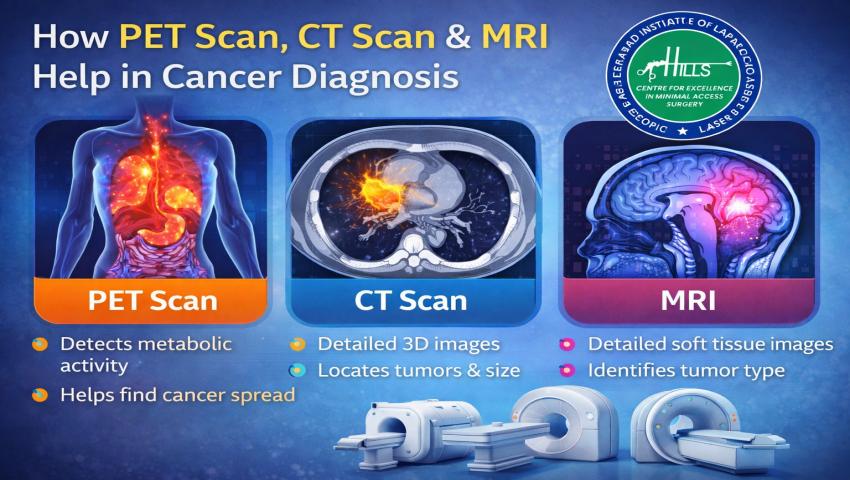
- PET Scan: A PET scan for cancer diagnosis shows how active the cancer cells are by highlighting areas with increased metabolic activity. PET scan means Positron Emission Tomography, and the full form of PET CT scan is Positron Emission Tomography–Computed Tomography, which combines metabolic details with clear anatomical images to help detect tumors accurately.
- CT Scan: A CT scan for cancer detection takes detailed images of bones, organs, and tissues, helping doctors locate tumors.
- MRI: MRI for cancer diagnosis uses magnetic waves to create clear pictures, especially of soft tissues like the brain, liver, or spine.
These three scans together help doctors understand how cancer is detected and how serious it is.
How PET Scan Helps in Cancer Diagnosis?
PET scans identify cancer cells that grow faster than normal cells. Because cancer cells absorb more radioactive tracer than healthy cells, they “light up” clearly on the scan. A PET scan for cancer is therefore very useful for:
- Detecting hidden cancer
- Finding cancer spread to other organs
- Checking if treatment is working
- Locating cancer that has returned
A PET scan also helps doctors understand how active the cancer is, which is important for planning the right treatment. It can show whether a tumor is aggressive or slow-growing, and whether cancer has reached the lymph nodes. This makes the PET scanning test a valuable tool for accurate cancer diagnosis, staging, and treatment planning.
Doctors often recommend PET CT scan in Hyderabad for complete body imaging because it combines both metabolic and structural details. Many specialists rely on PET scans for accurate staging, treatment decisions, and monitoring throughout the cancer journey, and a PET CT scan for breast cancer helps clearly identify cancer on PET scan by highlighting areas of increased metabolic activity.
How CT Scan Helps Detect and Stage Cancer?
A CT scan gives a clear, layered view of the inside of your body, helping doctors spot cancer early. It shows the exact size, shape, and position of a tumor with great accuracy. CT scans are widely used for cancers of the lungs, stomach, liver, pancreas, kidneys, and pelvis.
CT scans help in three major ways:
Detection & Diagnosis:
- They can identify small lumps or unusual growths that may not be visible in regular tests.
- The scanner creates 2D and 3D images, making it easier to see how deep a tumor is.
Staging & Planning Treatment:
- CT scans help doctors check if cancer has spread to lymph nodes or other organs.
- They guide biopsy needles to the exact spot where tissue needs to be taken.
Monitoring Progress:
- During treatment, CT scans help track whether the tumor is shrinking or growing.
- Doctors use them to see how well chemotherapy or radiation is working and adjust treatment if needed.
Because CT scans are quick, detailed, and dependable, they remain one of the best imaging tools for cancer detection and staging, especially for CT scan for tumor detection, helping doctors identify the size, location, and spread of tumors accurately.
How MRI Helps in Cancer Imaging?
MRI provides the most detailed view of soft tissues, making it very useful for detecting and studying cancers in sensitive areas, which is why MRI for cancer diagnosis is often recommended for accurate assessment and treatment planning.
What MRI Helps With:
- Finds small tumors and shows whether they look cancerous or harmless.
- Reveals how a tumor is affecting nearby organs, nerves, or blood vessels.
- Checks if the cancer has spread to tissues, lymph nodes, the brain, or bones.
- Helps doctors plan precise surgery or radiation therapy.
- Tracks whether tumors are shrinking after treatment and helps detect early recurrence.
MRI is especially helpful for brain, breast, prostate, liver, and spine cancers, offering clearer images than other scans—without any radiation exposure.
PET vs CT vs MRI – When Doctors Use Each One?
PET Scan (Positron Emission Tomography):
- How it works: Uses a radioactive tracer to show how active or fast-growing the cells are.
- When it’s used: Doctors use PET scans to detect cancer, check its spread, and monitor if treatment is working.
CT Scan (Computed Tomography):
- How it works: Uses X-rays to produce clear cross-sectional images of internal organs and bones.
- When it’s used: CT scans are chosen for quick imaging in lung issues, abdominal problems, injuries, and for guiding surgery or biopsy.
MRI Scan (Magnetic Resonance Imaging):
- How it works: Uses strong magnets and radio waves to give highly detailed images of soft tissues.
- When it’s used: MRI is preferred for brain, spine, joints, nerves, and soft-tissue tumours where maximum clarity is needed.
Why Accurate Imaging Matters in Cancer Treatment Planning?
Accurate imaging helps doctors:
- Confirm whether cancer is present
- Identify the stage
- Choose the right treatment.
- Plan surgery or chemotherapy
- Monitor recovery
Without proper imaging, treatment decisions can be incomplete.
5 Roles of Imaging Tests for Cancer:
These scans play a key role in:
- Early cancer detection scans
- Checking if cancer has spread
- Planning surgery
- Tracking treatment response
- Detecting recurrence
Regular cancer screening tests in Hyderabad help catch cancer before symptoms start.
How These Scans Guide Surgeons & Oncologists?
Oncologists rely on imaging to plan the safest and most effective treatment. Surgeons use scan results to understand:
- How big is the tumor?
- Which organs are involved
- What surgical approach is best
Specialists like Dr MSS Keerthi, one of the Best Cancer Surgeons in Hyderabad, use scan results to plan precise surgeries and personalized treatment.
Cancer Diagnosis in Hyderabad – Importance of Expert Guidance:
Hyderabad has some of the best diagnostic centers for cancer with PET, CT, and MRI facilities.
For accurate diagnosis and treatment, guidance from an experienced cancer specialist is essential.
Dr MSS Keerthi, known for her expertise and patient-centered approach, helps patients choose the right imaging tests and guides them through the entire diagnosis journey. She is recognised for her role in delivering the best cancer treatment in Hyderabad with proper staging and planning.
Conclusion:
PET, CT, and MRI scans are powerful tools that help detect cancer early, guide treatment, and improve survival. With expert advice and timely diagnosis, the chances of successful treatment become much higher.
Frequently Asked Questions (FAQ's):
It depends on the type and location of cancer. PET shows activity, CT shows structure, and MRI shows soft tissue details. Doctors often use more than one scan for accuracy.
PET detects most cancers but not all. Some slow-growing tumors may not appear clearly.
MRI is better for soft tissues, while CT is better for bones and chest-abdomen imaging. Each has its own advantages.
PET scans are highly accurate in identifying cancer spread to lymph nodes, bones, and organs.
Many times, yes. A PET-CT combines both scans to give a complete picture.
Yes, many early cancers can be seen in scans, especially in high-risk patients or during routine screening.
No. Scans show suspicion. Only a biopsy confirms cancer.